






The International Conference on Metallurgical Coatings and Thin Films (ICMCTF 2021) will be adapted into a Virtual Conference comprised of Live and On Demand Sessions. The registration deadline is April 30, 2021; all presenters must register by March 1, 2021. The event will feature:
Note: Live Sessions will also be recorded and added to the On Demand Sessions.
The ICMCTF 2021 Virtual Conference will kick off on Monday, April 26, 2021, with the Plenary Lecture, followed by two parallel sessions of invited talks. Each morning’s Live Sessions will follow this pattern, kicking off with a keynote talk from 10:00 – 11:00 am ET followed by two parallel sessions of invited talks, being capped off by our Awards Session on Friday, April 30, 2021.
All Registered/Paid attendees will also be able to participate in the Monday, April 26–Friday, April 30 Technical & Poster Sessions. The live sessions will feature plenary, invited and honorary lectures. After each day’s live sessions, we invite attendees to view the pre-recorded Technical & Poster Sessions On Demand. Posters will be a mix of pre-recorded (video or audio) talks and/or PDF files.
| 10:00 a.m. EDT | ICMCTF Chairs’ Welcome Address: Chris Muratore, University of Dayton, USA; Greg Greczynski, Linköping University, Sweden Thank you to Sponsors, and Introduction of Plenary Speaker |
| 10:15 a.m. | Plenary Lecture: Magnus Berggren, Linköping University, Sweden, Organic Bioelectronics – Nature Connected |
| 11:00 a.m. | Break |
| 11:15 a.m. | Flexible Printed Sensors for Biomechanical Measurements, Tse Nga Ng, University of California San Diego, USA |
| 11:45 a.m. | Flexible Electronics: From Interactive Smart Skins to In vivo Applications, Denys Makarov, Helmholtz-Zentrum Dresden-Rossendorf e. V. (HZDR), Germany |
| 12:15 p.m. | Biomimetic Extracellular Matrix Coating for Titanium Implant Surfaces to Improve Osteointegration, Sriram Ravindran, University of Illinois at Chicago, USA |
| 12:45 p.m. | Closing Remarks & Sponsor Slide with Platinum Shout Outs |
| 12:50 p.m. | Session Over – View Technical & Poster On Demand Presentations |
| 11:00 a.m. | Welcome, Announcements, & Thank You to Sponsors |
| 11:15 a.m. | Insights in the Structure, Defects and Stability of Mo2BC Thin Films by Advanced Characterization Methods, Christina Scheu, Max-Planck-Institut für Eisenforschung GmbH, Germany |
| 11:45 a.m. | Metal Diborides Everywhere: Conformal Coating, Infilling, and Alloying by Low Temperature CVD, John Abelson, University of Illinois at Urbana-Champaign, USA |
| 12:15 p.m. | A Progress Report on Bulk MAB Phases, Michel Barsoum, Drexel University, USA |
| 12:45 p.m. | Closing Remarks & Sponsor Slide with Platinum Shout Outs |
| 12:50 p.m. | Session Over – View Technical & Poster On Demand Presentations |
1:00 p.m.- 2:30 p.m.
| 10:00 a.m. EDT | Award Chairs Welcome Address: Ivan Petrov, Univ. of Illinois at Urbana-Champaign, USA Thank you to Sponsors, and Introduction of Student Finalists |
| 10:15 a.m. | Student Award Finalist Talk: Enhanced High-temperature Oxidation Resistance of Hard TiB2-rich Ti1-xAlxBy Thin Films, Babak Bakhit, Linköping University, Sweden |
| 10:30 a.m. | Student Award Finalist Talk: The Magneto-Plasmonic Properties of Ag-Co Composite Nanostructures, Hoang Luong, University of Georgia, USA |
| 10:45 a.m. | Student Award Finalist Talk: Nanoscale Stress and Microstructure Distributions across Scratch Track Cross-Sections in a Brittle-Ductile CrN-Cr Bilayer Film on Steel Revealed by X-ray Nanodiffraction, Michael Meindlhumer, Montanuniversität Leoben, Austria |
| 11:00 a.m. | Break |
| 11:15 a.m. | Silicon in Cutting Tools, Albir Layyous, Layyous Consulting, Israel |
| 11:45 a.m. | Stabilization of FCVAS Based Hybrid System for Deposition of Thick Tetrahedral Amorphous Carbon Films and its Applications, Jongkuk Kim, Korea Institute of Materials Science (KIMS), Korea, Republic of Korea |
| 12:15 p.m. | Low Interfacial Toughness Materials for Effective Large-scale Deicing, Kevin Golovin, University of Britsh Columbia, Canada |
| 12:45 p.m. | Closing Remarks & Sponsor Slide with Platinum Shout Outs |
| 12:50 p.m. | Session Over – View Technical & Poster On Demand Presentations |
| 11:00 a.m. | Welcome, Announcements, & Thank You to Sponsors |
| 11:15 a.m. | PVD Coatings Interaction with the Environment and Influence of Substrate on Coating Performance, Bojan Podgornik, Institute of Metals and Technologies, Slovenia |
| 11:45 a.m. | Insights into Indentation-Induced Cracking via 3D-FIB Tomography and HR-EBSD, Bo-Shiuan Li, University of Oxford, UK |
| 12:15 p.m. | Photon Beam and Plasma Cloud – Programmable Surfaces, Anna Buling, ELB Eloxalwerk Ludwigsburg GmbH, Germany |
| 12:45 p.m. | Closing Remarks & Sponsor Slide with Platinum Shout Outs |
| 12:50 p.m. | Session Over – View Technical & Poster On Demand Presentations |
1:00 p.m.-2:30 p.m.
| 10:00 a.m. EDT | Program Chairs’ Welcome: Greg Greczynski, Linköping University, Sweden Thank you to Sponsors & Introduction of Special Interest Talk |
| 10:15 a.m. | Special Interest Talk: Materials Discoveries at Extreme Conditions: A Path Towards New Advanced Materials, Igor Abrikosov, Linköping University, Sweden |
| 11:00 a.m. | Break |
| 11:15 a.m. | Are Protective Coatings Predictable?, Jochen Schneider, RWTH Aachen University, Germany |
| 11:45 a.m. | Controlling Phase and Microstructure of Ti-Cr-Al-N System Deposited by Arc Ion Plating, Kenji Yamamoto, Kobe Steel Ltd., Japan |
| 12:15 p.m. | Theoretical Insights into Transition Metal Nitrides for Thermoelectric and Piezoelectric Applications, Björn Alling, Linköping Univ., IFM, Theoretical Physics Div., Sweden |
| 12:45 p.m. | Closing Remarks & Sponsor Slide with Platinum Shout Outs |
| 12:50 p.m. | Session Over – View Technical & Poster On Demand Presentations |
| 11:00 a.m. | Welcome, Announcements, & Thank You to Sponsors |
| 11:15 a.m. | Influence of the Microstructural Evolution of YSZ TBCs on their Thermal Insulation Potential, Germain Boissonnet, Université de La Rochelle, France |
| 11:45 a.m. | High-Entropy Ceramic Thin Films; A Case Study of Nitrides, Oxides and Diborides, Paul Heinz Mayrhofer, TU Wien, Institute of Materials Science and Technology, Austria |
| 12:15 p.m. | Characterization of Defects and their Dynamics using Transmission Scanning Electron Microscopy, Daniel Gianola, University of California Santa Barbara, USA |
| 12:45 p.m. | Closing Remarks & Sponsor Slide with Platinum Shout Outs |
| 12:50 p.m. | Session Over – View Technical & Poster On Demand Presentations |
1:00 p.m.-2:30 p.m.
| 10:00 a.m. EDT | General Chair’s Welcome: Chris Muratore, University of Dayton, USA; Thank You to Sponsors & Introduction of Exhibition Keynote Lecture |
| 10:15 a.m. | Exhibition Keynote Lecture: Carbon based Coatings in Industrial Scale for Sustainable Surface Solutions, Jörg Vetter, Oerlikon Balzers Coating Germany GmbH, Germany |
| 11:00 a.m. | Break |
| 11:15 a.m. | Impact of Nitrogen Deficiency on the Phase Transformation of (Ti,Al)N Thin Films at Elevated Temperatures, Isabella Schramm, Sandvik Coromant R&D, Sweden |
| 11:45 a.m. | Air-based Sputtering Deposition of Gradient Oxynitride Coatings, Fu-Hsing Lu, National Chung Hsing University, Taiwan |
| 12:15 p.m. | Optimizing Ionization and Deposition Rate in High Power Impulse Magnetron Sputtering, Daniel Lundin, Linköping University, Sweden |
| 12:45 p.m. | Closing Remarks & Sponsor Slide with Platinum Shout Outs |
| 12:50 p.m. | Session Over – View Technical & Poster On Demand Presentations |
| 11:00 a.m. | Welcome, Announcements, and Thank You to Sponsors |
| 11:15 a.m. | Advanced Nanomaterials for Energy-Related Applications, Eva Schubert, University of Nebraska-Lincoln, USA |
| 11:45 a.m. | Photocatalytic Bismuth Oxide Coatings and their Potential for Water Treatment Applications, Marina Ratova, Manchester Metropolitan University, UK |
| 12:15 p.m. | High Entropy Materials For Energy Applications, Jyh-Ming Ting, National Cheng Kung University, Taiwan |
| 12:45 p.m. | Closing Remarks, Thank You’s, & Sponsor Slide with Platinum Shout Outs |
| 12:50 p.m. | Session Over – View Technical & Poster On Demand Presentations |
1:00 p.m.-2:30 p.m.
| 10:00 a.m. EDT | 2022 Program Chairs’ Welcome: Samir Aouadi, University of North Texas, USA Thank you to Sponsors & Introduction of Special Interest Talk |
| 10:15 a.m. | Special Interest Talk: Design, Metallurgy and Manufacturing Technologies of Targets for Hard Coating and Tribological Applications, Peter Polcik, Plansee Composite Materials GmbH, Germany |
| 11:00 a.m. | Break, Announcement of Student Awardees, & Introduction of Bill Sproul Awardee |
| 11:15 a.m. | Bill Sproul Award and Honorary ICMCTF Lecture: Transition Metal Nitride Layers: New Phases and New Properties, Daniel Gall, Rensselaer Polytechnic Institute, USA |
| 11:45 a.m. | Break & Introduction of R.F. Bunshah Awardee |
| 12:00 p.m. | R.F. Bunshah Award and ICMCTF Honorary Lecture: From a Sparkling Brass Chain and Twitching Frog Legs: The Astonishing Path to Plasma-Based Advanced Coatings, André Anders, Leibniz Institute of Surface Engineering (IOM), Felix Bloch Inst., Leipzig Univ., Germany |
| 12:45 p.m. | Closing Remarks, Thank Yous & Sponsor Slide |
| 12:50 p.m. | Session Over – View Technical & Poster On Demand Presentations |
1:00 p.m.-2:30 p.m.
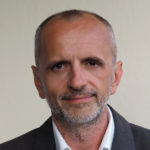
Grzegorz (Greg) Greczynski
Linköping University, Sweden
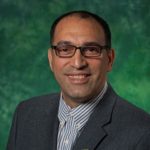
Samir Aouadi
University of North Texas, USA
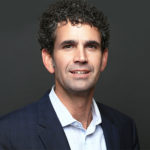
Christopher Muratore
University of Dayton, USA