
Speaker Biographies
|
Arie J. den Boef |
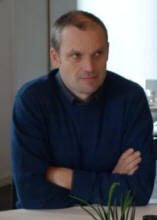
Arie den Boef was born in Oshawa, Canada in 1960. In 1979 he joined Philips Research Laboratories as a research assistant where he worked on characterizing the noise and coherence properties of laser diodes. In addition he studied electrical engineering at the Eindhoven Polytechnic Institute where he received a B.Sc. degree in 1985. In 1985 he joined the optics group of Philips Research where he first worked on holographic interferometry and then started working towards a Ph.D. on atomic force microscope (AFM). In 1991 he received the Ph.D. degree from the University of Twente with a thesis titled “Scanning Force Microscopy using Optical Interferometry”. From 1992 till 1995 den Boef worked at Philips Medical Systems in the area of Magnetic Resonance Imaging (MRI) and in 1995 he joined Philips Optical Storage where a worked as a system engineer on CD-Recordable/Rewritable systems. In 1997 he joined ASML as a system engineer. In 2002 he joined ASML’s research department where he started exploring optical sensors and measurement systems with emphasis on wafer alignment sensors and scatterometry for CD and overlay metrology. Den Boef was appointed part-time full professor in 2016 at the Vrije Universiteit of Amsterdam in the area of “nano-lithography and metrology”. At the university he is teaching a master course on optical wafer metrology techniques and he has set-up a small research group that explores the use of computational imaging techniques for metrology. |
Peter De Wolf |
Dr. Peter De Wolf
is Application
Director at Bruker
Nano Surfaces. He is
leading Bruker
Nano’s international
team of application
scientists and
laboratories
throughout the world
(with locations in
Taiwan, Singapore,
China, France,
Germany, UK, USA and
Japan). These labs
cover all
applications related
to Scanning Probe
Microscopy (SPM),
Optical & Stylus
Profilometry,
Nanoindentation,
Tribology &
Mechanical testing
and are used daily
to receive visiting
scientists for
application testing
and trainings, and
to test novel
metrology concepts.
Dr. De Wolfe also
holds a PhD in
Electronics
Engineering from the
University of
Leuven, Belgium and
IMEC. Topic:
Development of new
SPM methods for 2D
carrier profiling in
semiconductors. He
is author and
co-author of over 30
publications related
to electrical
characterization
using SPM in
peer-reviewed
scientific journals.
He also owns several
SPM patents, and
developed several
new SPM modes for
electrical
characterization,
including Scanning
Spreading Resistance
Microscopy (SSRM),
Tunneling-AFM (TUNA)
Nano-Potentiometry,
and DataCube
methods. For the
last 14 years, he
has held several R&D
and Application
positions within
Bruker Nano,
formerly Veeco
Metrology in both
Europe and the USA.
He was co-organizer
of several
international
conferences and
tutorial sessions on
SPM. |
|
|
|
|
Anne Delobbe |
After a Ph-D on X ray absorption and circular dichroïsm spectroscopies (Paris Sud (XI) University), and a year as a teacher (PARIS VI University) combined with research on structure and magnetic properties of clusters (Co or Ni in AlN), Anne Delobbe has entered Orsay Physics, French company specialised in FIB (Focused Ion Beam) technology in 2000. Orsay Physics has been founded in 1989, by Pierre Sudraud, on the Orsay campus of Paris Sud University and has moved to south of France (close to Aix en Provence) in 1997. In this company, she first was manager of the final tests (production department) also in charge of worldwide installation of new systems and technical contact with customers. Then she was named responsible of application and software teams (R&D department). This application team, in the R&D department, is in charge of characterization and validation of prototypes but also of customer demonstrations. She then became Scientific Marketing/ business development manager and Vice President at Orsay Physics since January 2012. She is currently head of R&D department in Orsay Physics. Following, in 2013, the merger between Orsay physics and Tescan (Czech company) to create Tescan Orsay Holding (TOH), Anne has taken the position of Chief Technical officer (CTO) in Tescan Orsay holding since April 2015.
She is attending
several conferences
every year and she
is author and
co-author of more
than 20 articles in
international
reviews. |
|
|
G. Dan Hutcheson is CEO and Chairman of VLSIresearch inc. He is a recognized authority on the semiconductor industry, winning SEMI’s Sales and Marketing Excellence Award in 2012 for “empowering executives with tremendous strategic and tactical marketing value" through his e-letter, The Chip Insider®; his book Maxims of Hi-Tech, and his many interviews of executives. He is thought of as “the marketing voice and expert for the industry.” “Dan has methodically captured the essence of the industry and produced it in such a way for all to benefit … He has been such an integral part of the industry for so long, it is difficult to imagine the industry without his contributions.” His consulting work has included hundreds of successful programs involving product development, launch, and positioning. Dan has a proven track record of developing economic models that accurately predict trends. He is widely known for the forecasting of strategic infrastructure shifts. This includes his early-eighties development of the first factory cost-of-ownership models, multiple wafer size and lithography transitions, the rise of the fabless/foundry model to counter escalating fab costs, the shift of the DRAM memory market from the United States to Japan in the 1980s, then its shifting again to Korea in 1990s, as well as the driving forces behind the rise of Flash Memory.
Dan’s public work on
the industry
includes two
articles for
Scientific American
challenging
predictions of the
demise of Moore’s
Law by demonstrating
how the innate
abilities of
scientists to
innovate have
outpaced the
doomsayers, and an
invited article on
the history and
economics of Moore’s
Law for the SIA. He
has also been the
keynote or invited
speaker at dozens of
conferences. His pro
bono work has
included serving as
an advisor on
innovation to the
White House Council
of Economic
Advisors, teaching
invited courses at
Stanford University,
and serving on the
Board of Advisors to
the Extension School
at UC Berkeley. Dan
holds two patents
and a Master’s
degree in Economics
from San Jose State
University. He is a
senior member of the
IEEE. |
|
|
Sergei Kalinin
is the director of
the Institute for
Functional Imaging
of Materials (IFIM)
and distinguished
staff member at the
Center for Nanophase
Materials Sciences
at Oak Ridge
National Laboratory.
He received his MS
degree from Moscow
State University in
1998 and Ph.D. from
the University of
Pennsylvania (with
Dawn Bonnell) in
2002. His research
presently focuses on
the applications of
big data and
artificial
intelligence methods
in atomically
resolved imaging by
scanning
transmission
electron microscopy
and scanning probes,
as well as
mesoscopic studies
of electromechanical
and transport
phenomena via
scanning probe
microscopy. Sergei
has co-authored >600
publications, with a
total citation of
>27,000 and an
h-index of >81. He
is a Fellow of MRS,
APS, IoP, IEEE,
Foresight Institute,
and AVS; a recipient
of the RMS Medal for
Scanning Probe
Microscopy (2015);
Blavatnik Award for
Physical Sciences
(2018), Presidential
Early Career Award
for Scientists and
Engineers (PECASE)
(2009); Burton Medal
of Microscopy
Society of America
(2010); 3 R&D100
Awards (2008, 2010,
and 2016); and a
number of other
distinctions..
|
|
|
|
|
Sung Park |
Sung Park, Ph.D.;
Molecular Vista, CEO
and co-founder. Sung
is the CEO of
Molecular Vista,
which he co-founded
with Prof. Kumar
Wickramasinghe (UC
Irvine, formerly of
IBM) in 2011 to
provide research and
industrial tools for
rapid and nanoscale
imaging with
chemical
identification.
Sung has over 25
years of experience
of industrial R&D,
engineering,
marketing and sales,
and operations. He
co-founded Park
Scientific
Instruments (PSI),
which was one of the
first commercial
companies to develop
and sell scanning
tunneling
microscopes (STM)
and atomic force
microscopes (AFM).
He served as the
president for the
first six years and
then as a board
member while the
company grew to be
about 100 employees
with revenue of
about $15M in 1997
when it was acquired
by Thermo
Instruments; by
then, PSI had sold
upwards of 1,000
instruments to
customers
worldwide.
Throughout his
career, he has
overseen
developments of
ultra-high vacuum
STM, low-temperature
STM, AFM, scanning
capacitance
microscope, and
specialized MEMS
products, all of
which have been sold
to scientific
community
successfully. Prior
to founding Park
Scientific
Instruments, he
worked as a post-doc
at IBM Watson
Research Center.
Sung earned his
Ph.D. in Applied
Physics from
Stanford University
and BA in Physics
from Pomona College. |
|
|
|
|
Oliver D. Patterson |
Oliver D. Patterson
serves as Principal
Technologist for
Hermes-Microvision,
an ASML company and
leading E-beam
inspection tool
supplier. Previously he was a
Distinguished Member of Technical Staff
for GLOBALFOUNDRIES
and has also worked
for IBM
Microelectronics,
Lucent Technologies,
Agere Systems and
the United States
Air Force. He
received the S.B.
degree from the
Massachusetts
Institute of
Technology,
Cambridge, MA, the
M.S. degree from the
University of
Wisconsin, Madison,
WI and the Ph.D.
degree from the
University of
Michigan, Ann Arbor,
MI, all in
electrical
engineering. His
research interests
include the use of
e-beam inspection
for detection of
voltage contrast,
physical and pattern
fidelity defects,
novel test structure
design and yield
improvement in
general and he has
authored over 25
patents and 70
publications in
these areas. Dr.
Patterson is a
longtime member of
the Committee of
ASMC and was the
conference
Co-Chairman for ASMC
2014. He has served
as a Guest Editor
for the IEEE
TRANSACTIONS ON
SEMICONDUCTOR
MANUFACTURING
numerous times
including the last
five years and is a
Senior Member of
IEEE |
|
|
Carl Williams
is the Acting
Director of the
Physical Measurement
Laboratory, National
Institute of
Standards and
Technology. He is a
Fellow of
the Joint Quantum
Institute,
the Joint Center for
Quantum Information
in Computer Science,
and Adjunct
Professor of Physics
at the University of
Maryland. He
co-chairs the
Subcommittee on
Quantum Information
Science under the
Committee of Science
of the National
Science and
Technology Council.
In collaboration
with SRU
International, he is
working to establish
the Quantum Economic
Development
Consortium (QED-C)
whose goal is to
create the
foundational
infrastructure that
will help ensure
that the United
States can
effectively compete
for this critical
emerging industrial
sector that will be
crucial to both the
future economic and
national security of
the United States.
He engages with
professional
societies,
international
organizations,
academia, and
industry to develop
policy solutions
that advances
measurement science,
basic research,
standards, and
technology
development crucial
to the economic and
national security of
the United States.
He has authored over
120 scientific
publications and has
been a speaker at
numerous national
and international
conferences. He is
a Fellow of the
American Association
of the Advancement
of Science, the
American Physical
Society, and the
Washington Academy
of Science. |
Daniel C. Worledge |
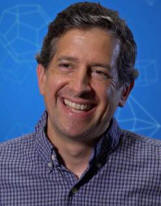
Dr. Worledge received a B.A. with a double major in physics and applied mathematics from U.C. Berkeley in 1995, receiving the Department Scholar Award in physics and the Dorothea Klumpke Roberts Prize in mathematics. He then received a Ph.D. in applied physics from Stanford University in 2000, with a thesis on spin-polarized tunneling in oxide ferromagnets, measuring the largest tunneling spin-polarization in (LaSr)MnO3 and the first negative tunneling spin-polarization in SrRuO3. After joining the Physical Sciences Department at the IBM T. J. Watson Research Center as a Post-doc in 2000, he became a Research Staff Member in 2001, inventing and developing Current-in-Plane Tunneling as a fast turn-around measurement method for magnetic tunnel junctions. In 2003, Dr. Worledge became the manager of the MRAM Materials and Devices group, and in 2013 he became Senior Manager of MRAM. In 2014 he was promoted to Principle Research Staff Member and in 2015 to Distinguished Research Staff Member. He has worked on developing Toggle and then Spin Torque MRAM, including discovering perpendicular magnetic anisotropy in Ta|CoFeB|MgO, and leading the IBM team that developed perpendicular magnetic tunnel junctions and demonstrated the first integrated perpendicular spin torque MRAM, with ultra-low bit error rate. His current research interests include magnetic devices and their behavior at small dimensions, and new magnetic devices for logic applications. Dr. Worledge has received four IBM Outstanding Technical Achievement Awards and the IBM Research Client Award. |
|
|
|
|
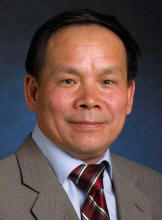
Dr. Wenbing Yun
is a serial
entrepreneur,
innovator,
world-renowned
scientist, Fellow of
Optical Society of
America. He has over
100 publications and
co-authored two book
chapters. He has
sixty-five issued
and 25 pending
provisional patents
and 4 pending
non-provisional
patents. As a PI and
co-PI, he received
four prestigious R&D
100 awards for his
work on development
of x-ray
microscopes. From
March 2000 to July
2013, he was
Founder, Chief
Technology Officer,
and President (to
2009) of Xradia,
Inc., a private
company in the San
Francisco Bay area.
Under his
leadership, the
company established
as a worldwide
leader in developing
and commercializing
novel x-ray imaging
systems for
high-resolution
nondestructive
imaging, materials
characterization,
and medical and
biomedical
research. The
company grew rapidly
and profitably with
a revenue of about
$40M/year and over
100 people in 2013,
and when the company
was acquired by Carl
Zeiss, a world
leader in electron
and optical
microscopy. In 2014,
he co-founded Sigray,
Inc, with a mission
to develop a new
generation of
interruptive x-ray
source and optic
technology with over
10X higher
performance than
existing
counterparts, and a
suite of x-ray
analysis instruments
enabled by the
technology. Within
three years, Sigray
has grown rapidly to
over 30 people and
expects to achieve
200% revenue growth
going forward.
Before 200, Dr. Yun
was responsible for
several successful
X-ray imaging
projects at Argonne
National Laboratory
(ANL) and Lawrence
Berkeley National
Laboratory,
including design,
construction, and
commissioning of
three beam lines at
Advanced Photon
Source (APS/ANL). |
|
|
|
|
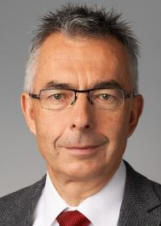
Ehrenfried Zschech is Department Head for Microelectronic Materials and Nanoanalysis at the Fraunhofer Institute for Ceramic Technologies and Systems in Dresden, Germany, which he joined in 2009. His responsibilities include multi-scale materials characterization and reliability engineering. Ehrenfried Zschech received his Dr. rer. nat. degree from Technische Universität Dresden. After having spent four years as a project leader in the field of metal physics and reliability of microelectronic interconnects at Research Institute for Nonferrous Metals in Freiberg, he was appointed as a university teacher for ceramic materials at Freiberg University of Technology. In 1992, he joined the development department at Airbus in Bremen, where he managed the metal physics group and studied the laser-welding metallurgy of aluminum alloys. From 1997 to 2009, Ehrenfried Zschech managed the Materials Analysis Department and the Center for Complex Analysis at Advanced Micro Devices in Dresden. In this position, he was responsible for the analytical support for process control and technology development in leading-edge semiconductor manufacturing, as well as for physical failure analysis. He holds an adjunct professorship at Faculty of Chemistry of Warsaw University, Poland, as well as honorary professorships for Nanomaterials at Brandenburg University of Technology Cottbus and for Nanoanalysis at Technische Universität Dresden. He has published three books and he has authored or co-authored more than 200 papers in peer-reviewed journals in the areas of materials science, solid-state physics and reliability engineering. Ehrenfried Zschech is Member of the Board of Directors of the Materials Research Society (MRS), Member of the Senate oft he European Materials Research Society (E-MRS) and Honorary Member of the Federation of the European Materials Societies (FEMS). |
|
Platinum Sponsors |
 |
|
Gold Sponsors |
|
Silver Sponsors |
 |
| Partners |
 |
 |
 |
 |
 |